The Next Big Idea Starts Local
Over the past few months, I've had the opportunity to attend three very different conferences.
The first was the American Society on Aging's annual conference, where I attended a session inspired by the latest issue of Generations magazine, Bold Visions. A few weeks later, I was in Chicago for the Urban Affairs Association Conference, listening to researchers discuss neighborhoods, cities, and local governance. Most recently, I traveled to Venice for the European Urban Research Association Conference, where this year's theme, Cities Under Strain, explored the challenges facing cities across Europe.
Different disciplines.
Different audiences.
Different countries.
Yet somewhere between Chicago and Venice, I realized I kept hearing the same message.
The next big idea starts local.
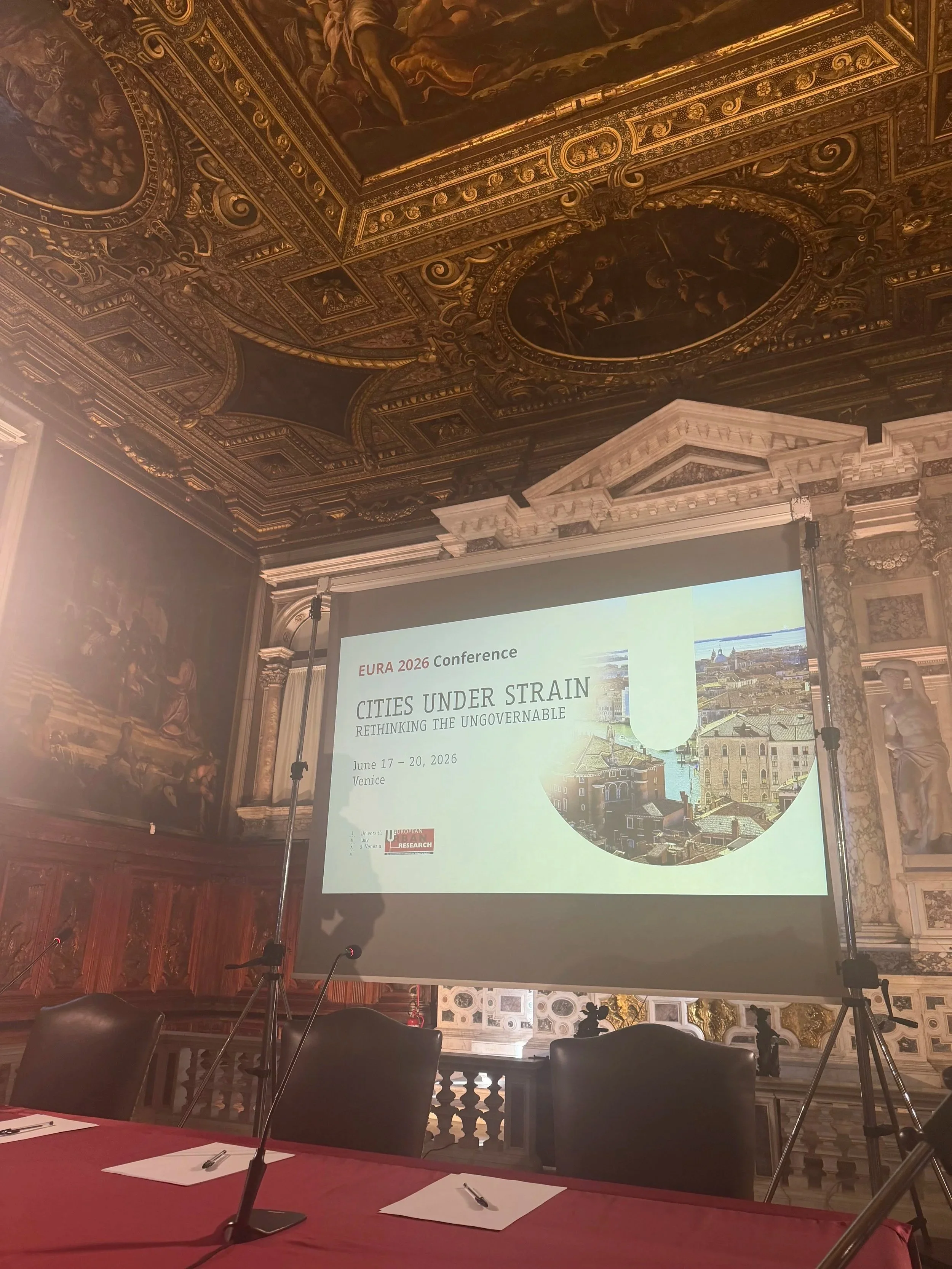
European Urban Research Association 2026 Conference, Venice, IT (June 2026).
That may sound surprising. We often think of innovation as something that happens on a national stage. We celebrate breakthrough technologies, sweeping legislation, and large-scale initiatives. Those efforts certainly matter.
But increasingly, I'm hearing something different.
Across disciplines, researchers and practitioners are rediscovering the importance of local communities, not because local problems are small, but because this is where our biggest challenges become real and where meaningful change often begins.
Urban scholars spoke about the importance of local politics, neighborhood revitalization, and municipal leadership to urban regeneration. They described cities as laboratories where communities are experimenting with solutions to housing, transportation, climate resilience, and economic development. The conversation wasn't about thinking smaller. It was about recognizing that local communities are where systems are experienced and where innovation becomes tangible.
International Conference on Urban Affairs, Chicago, IL (April 2026).
As I listened, I found myself thinking about aging.
For those of us working in aging, one of our most common goals is helping people age in place. But I've begun to wonder whether we've unintentionally made that phrase too much about housing and not enough about community.
Aging in place isn't simply about remaining in the same home.
It's about remaining connected to a place.
Can I safely walk through my neighborhood?
Can I reach the grocery store or my doctor's office?
Can I find housing that meets my changing needs?
Do I know my neighbors?
Is there a library, senior center, park, or community organization that helps me stay engaged?
Can I continue contributing to my community as I grow older?
Those questions aren't simply about healthcare.
They're questions about community.
They're questions about local policy.
And ultimately, they're questions about whether our neighborhoods make it possible for people to thrive. I am convinced that aging and urban affairs are asking many of the same questions.
How do we design neighborhoods that encourage connection?
How do we create communities that are resilient, inclusive, and accessible?
How do local decisions shape health, opportunity, and quality of life?
Healthy aging doesn't happen only because healthcare systems work well.
It happens because communities work well.
Communities that are walkable, connected, accessible, and welcoming don't just benefit older adults. They benefit parents pushing strollers, children walking to school, people living with disabilities, and anyone who hopes to remain active and engaged throughout life.
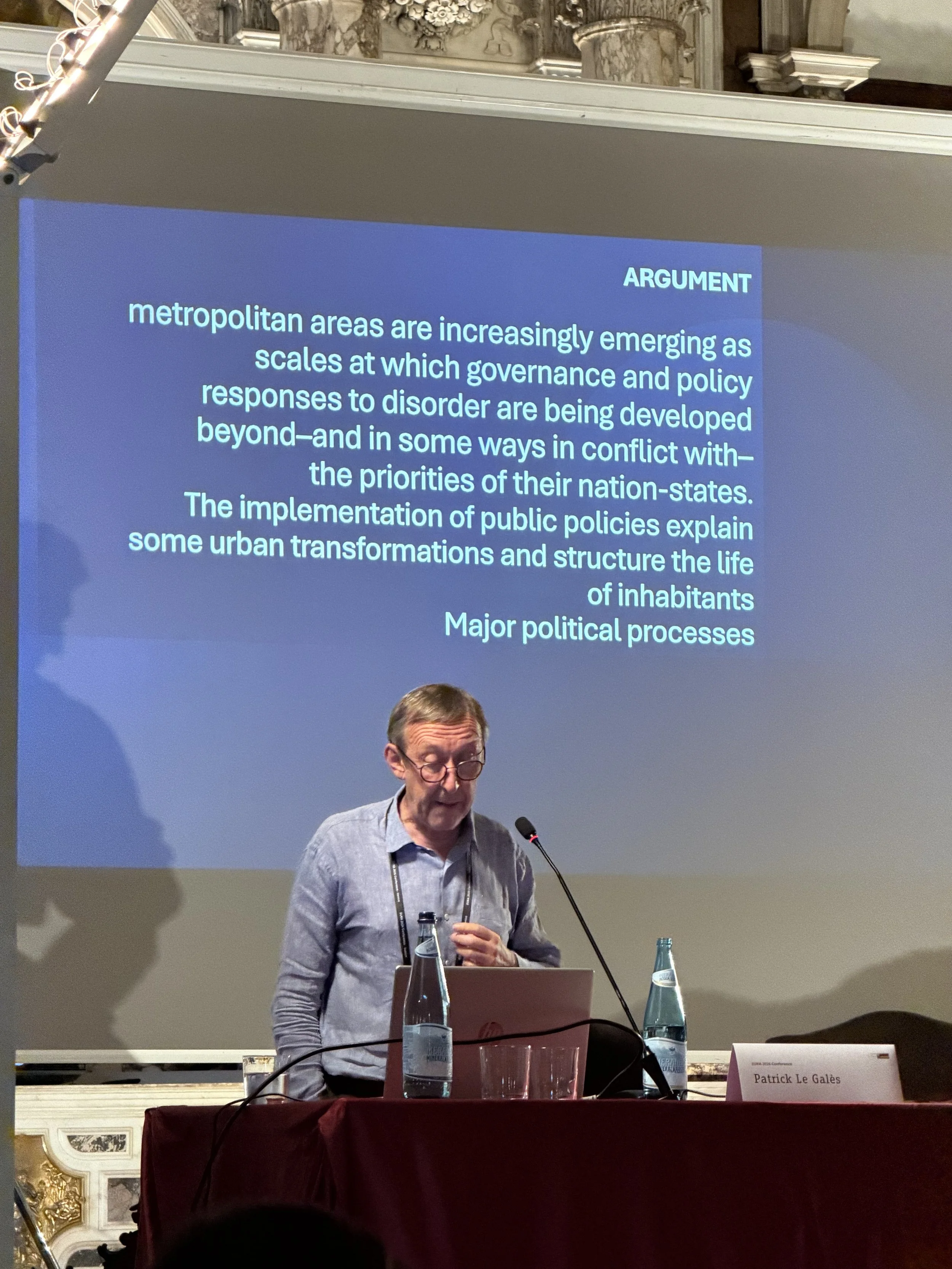
Plenary speaker Patrick Le Galès at the European Urban Research Association conference’s opening session in Venice, It (June, 2026).
Perhaps that's why the conversations I heard this year resonated so strongly with me.
Whether the topic was urban regeneration in Europe, neighborhood conditions in American cities, or the future of aging, I wasn't hearing three separate conversations.
I was hearing one.
A conversation about the importance of place.
A conversation about the role of local leadership.
A conversation about building communities where people can flourish across the life course.
As someone whose work increasingly spans aging, public health, and urban affairs, that realization has helped me make sense of my own path. These fields are often treated as separate disciplines, but I'm becoming convinced they're all asking the same question.
How do we build communities where people can thrive across the life course?
I don't know that there's a single answer.
But I do know where I think we should keep looking.
The neighborhood.
The city.
The community.
Because if the conversations I've heard this year are any indication, the next generation of innovation may not begin with bigger programs or broader policies.
It may begin by paying closer attention to the places we already call home.