Economic Development: Building Healthier Communities
"You can't 'economic development' your way out of the health disparities that exist in McKeesport."
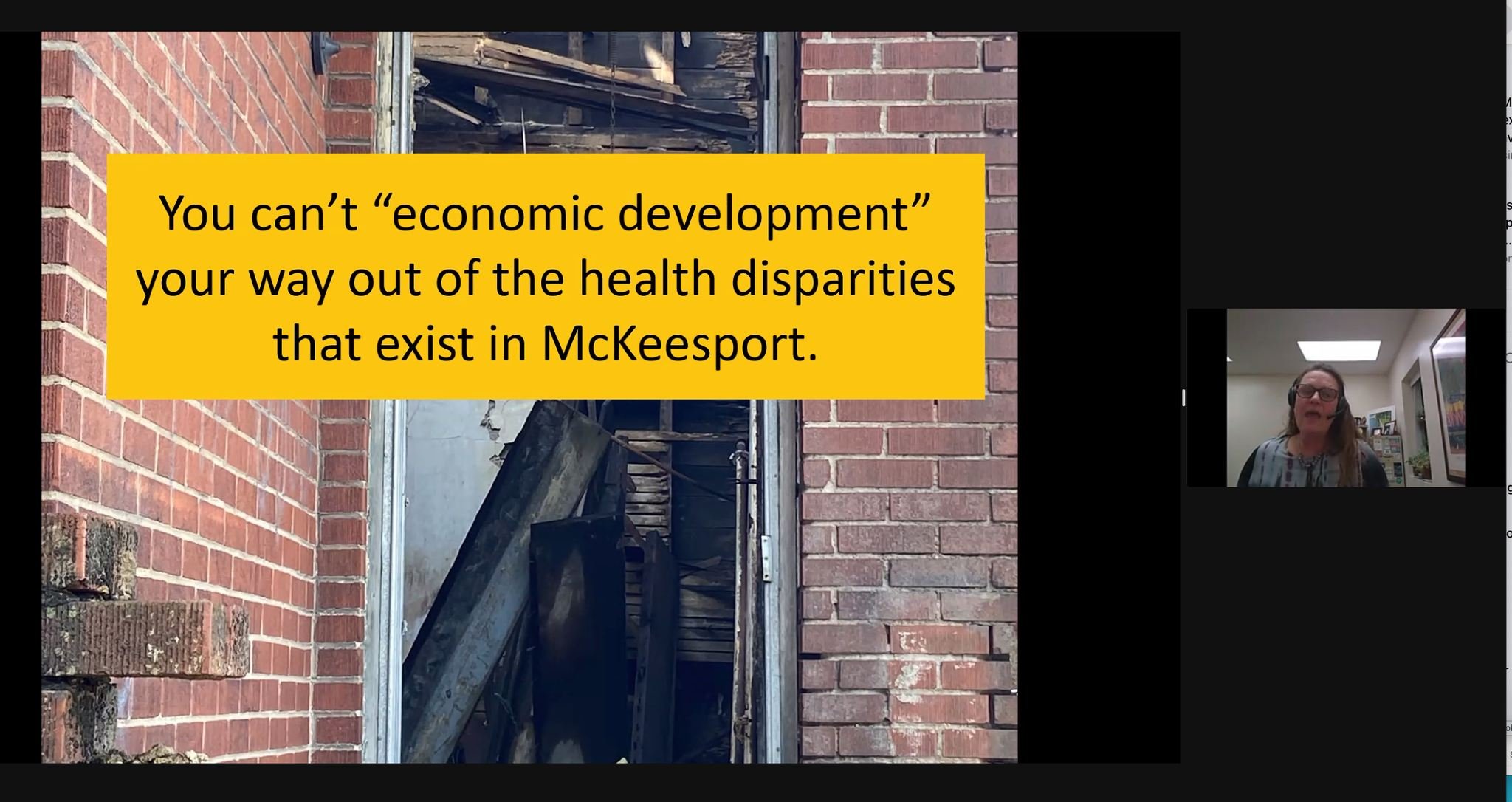
Author’s PhD defense (April 2022).
This realization emerged from my PhD research, and it has only become more urgent as I continue working with communities facing the long shadow of deindustrialization. McKeesport, like so many Mon Valley communities, struggles with impacts that extend far beyond economics—they're written in the health outcomes of residents. I remain convinced that traditional economic development activities alone will not address the health and wellness of the entire community. That's why recent efforts by the City of McKeesport to develop Bridges to Care are so important to complement the new economic development plan, Mon Valley Forward.
A Shift in Perspective
I recently attended the Southwestern Pennsylvania Partnership for Aging (SWPPA) Conference, where a session facilitated by Joe Angelleli and Guy Caruso called "Social Isolation to Social Connections" helped evolve my thinking. Research shows that social isolation increases the risk of premature death by up to 50%—comparable to smoking 15 cigarettes a day. But here's what struck me: they discussed how economic development itself creates social connectedness opportunities. Economic development activities naturally bring people together for commerce, employment, and community building. Poverty, on the other hand, isolates people—cutting them off from these very connections that sustain health.
The Complex Relationship
The relationship between economic growth and health is well established. Economic growth improves health through better nutrition, access to healthcare, and improved living conditions, while healthier populations support economic growth by creating a more skilled and productive workforce. However, not all economic development benefits resident health, and vice versa. A new factory might bring jobs but also environmental hazards. A revitalized downtown might create gathering spaces while displacing long-time residents.
A New Question
This brings me to the question that drives my work: How can we think more holistically about economic development so that the health of the community is the driver?
What if we measured the success of economic development not just in jobs created or tax revenue generated, but in improved health outcomes, stronger social networks, and reduced health disparities? What if every development plan started with the question: "How will this make our community healthier?"
I'd love to hear your thoughts. What approaches have you seen work in your community to connect economic development with better health outcomes?